

Inflammation Isn’t Just Part of Aging
Inflammation has become one of the most commonly discussed concepts in modern health conversations, yet it is also one of the most misunderstood.
Many people hear the word and immediately think of swollen joints, injuries, or visible irritation. Others have simply accepted inflammation as an inevitable consequence of getting older, living a stressful life, or dealing with chronic symptoms. It has become so normalized that people often assume feeling inflamed, fatigued, achy, bloated, foggy, or metabolically sluggish is simply part of modern life.
But chronic inflammation is not “normal,” even if it has become common.
And perhaps more importantly, inflammation itself is often not the true root problem. More often, it is a biological response—your body’s attempt to protect, adapt, and communicate that something deeper is out of balance.
This is where the contrast between conventional medicine and functional medicine becomes especially important.
Because while both paradigms recognize inflammation, they often approach it in profoundly different ways.
Two Approaches. Two Very Different Outcomes.
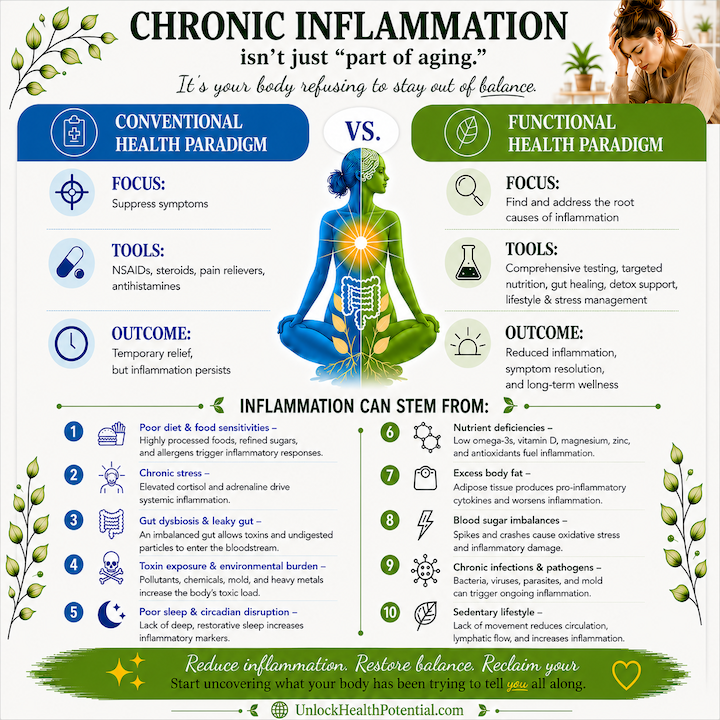
The Conventional Health Paradigm
Conventional medicine is extraordinarily valuable in acute and emergency care. It excels at identifying disease, managing severe pathology, and reducing immediate suffering. When inflammation is present, the conventional approach often focuses on suppressing the inflammatory response as quickly and efficiently as possible.
The tools commonly include:
- NSAIDs
- Steroids
- Pain relievers
- Antihistamines
- Symptom-management medications
This can absolutely provide relief, and in some cases these interventions are necessary and lifesaving.
But the conventional framework often centers around a single question: “How do we reduce inflammation?”
Functional medicine asks a different question: “Why is the body inflamed in the first place?”
That distinction changes everything.
Because inflammation is rarely random. It is often the downstream consequence of deeper dysfunction occurring across multiple interconnected systems in the body.
Suppressing inflammation without understanding its drivers can sometimes be like silencing a smoke alarm while the fire continues burning behind the walls.That question changes everything.
The Functional Health Paradigm
Functional medicine views inflammation through a systems-biology lens. Instead of treating inflammation as an isolated event, it sees it as a signal emerging from the interaction of:
- Metabolism
- Stress physiology
- Gut health
- Immune activity
- Environmental exposures
- Sleep quality
- Nutrient status
- Lifestyle patterns
The goal is not simply temporary symptom relief. The goal is restoration of balance and long-term resilience.
This approach recognizes that the body functions as an interconnected ecosystem. When one system becomes overwhelmed or dysregulated, other systems compensate. Over time, those compensations can manifest as persistent inflammation.
And this is why so many people feel trapped in cycles of recurring symptoms despite trying medications, supplements, restrictive diets, or temporary wellness trends that never fully resolve the underlying issue.
Why Chronic Inflammation Matters
Inflammation itself is not inherently bad. In fact, acute inflammation is essential for survival. It helps the body fight infections, repair tissues, respond to injury, and restore equilibrium.
The problem arises when inflammation becomes chronic, low-grade, and persistent. Unlike acute inflammation, chronic inflammation often operates quietly beneath the surface for years before more obvious symptoms emerge. It contributes to:
- Fatigue
- Metabolic dysfunction
- Insulin resistance
- Cardiovascular disease
- Cognitive decline
- Autoimmune activity
- Accelerated aging
- Impaired recovery
This is why inflammation has become one of the most important concepts in modern health science.
But again, inflammation is often not the beginning of the story. It is the body’s response to deeper stressors.unchanged.
10 Major Root Causes of Chronic Inflammation
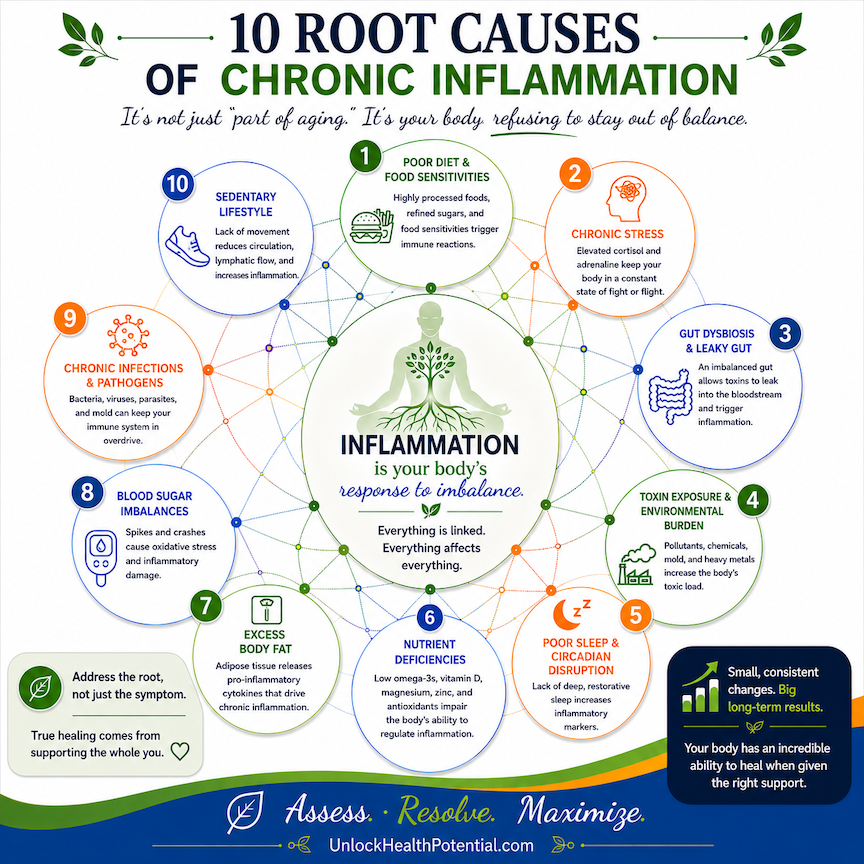
1. Poor Diet & Food Sensitivities
One of the most common drivers of inflammation is the modern processed-food environment.
Highly refined foods, excess sugar, industrial seed oils, and ultra-processed ingredients can repeatedly stimulate inflammatory pathways throughout the body. In some individuals, hidden food sensitivities may also amplify immune activation and contribute to ongoing inflammation, digestive issues, fatigue, headaches, or joint pain.
Inflammation is not always triggered by dramatic reactions. Sometimes it is the cumulative effect of repeated low-grade exposure over time.
2. Chronic Stress
The body interprets chronic emotional stress as a biological threat. When stress becomes persistent, cortisol and adrenaline remain elevated for prolonged periods, activating inflammatory signaling pathways throughout the body. Over time, this creates a state where the nervous system becomes hypervigilant and the body struggles to fully return to a restorative state.
This is one reason why many people notice worsening symptoms during periods of emotional overload, burnout, or chronic pressure.
The body does not separate mental stress from physical stress. Both influence inflammation.
3. Gut Dysbiosis & Leaky Gut
The gut plays a central role in immune regulation. An unhealthy gut microbiome, digestive dysfunction, or increased intestinal permeability (“leaky gut”) can allow inflammatory compounds and partially digested particles to enter the bloodstream, triggering immune activation throughout the body.
This is why gut dysfunction is often connected not only to digestive symptoms, but also to fatigue, brain fog, joint pain, skin conditions, and metabolic dysfunction.
The gut is not isolated from the rest of the body. It is deeply interconnected with the immune and inflammatory systems.
4. Toxin Exposure & Environmental Burden
Environmental toxins are one of the most overlooked drivers of chronic inflammation. Exposure to mold, heavy metals, air pollution, pesticides, plastics, and industrial chemicals can increase oxidative stress and inflammatory load within the body.
The body is designed to detoxify and adapt, but chronic exposure combined with poor recovery can overwhelm these systems over time. Inflammation is often part of that protective response.
5. Poor Sleep & Circadian Disruption
Sleep is one of the body’s most powerful anti-inflammatory processes. During deep sleep, the body repairs tissues, regulates immune activity, restores metabolic balance, and reduces inflammatory burden.
When sleep becomes fragmented, irregular, or insufficient, inflammatory markers rise significantly. This is one reason poor sleep is so strongly associated with fatigue, weight gain, insulin resistance, mood instability, and chronic disease risk.
6. Nutrient Deficiencies
The body requires specific nutrients to regulate inflammation effectively. Low levels of omega-3 fatty acids, magnesium, zinc, vitamin D, and antioxidants can impair the body’s ability to control oxidative stress and inflammatory signaling.
Modern diets often leave people calorie-sufficient but nutrient-deficient, contributing to chronic inflammatory patterns over time.
7. Excess Body Fat
Adipose tissue is not metabolically inactive. Excess body fat—particularly visceral fat around the abdomen—produces inflammatory cytokines that contribute to systemic inflammation and metabolic dysfunction.
This creates a self-reinforcing cycle:
- Inflammation worsens insulin resistance
- Insulin resistance promotes fat storage
- Fat tissue further increases inflammation
8. Blood Sugar Imbalances
Blood sugar instability itself can drive inflammation. Repeated glucose spikes and crashes increase oxidative stress and inflammatory signaling, particularly when combined with poor sleep, chronic stress, and insulin resistance.
This is why inflammation and metabolic dysfunction are so tightly connected. The systems influence each other continuously.
9. Chronic Infections & Pathogens
Hidden infections can keep the immune system in a prolonged state of activation. Bacterial, viral, parasitic, or mold-related exposures may contribute to persistent inflammatory responses that drain energy and impair recovery.
In some individuals, unresolved immune activation becomes one of the major hidden drivers of chronic symptoms.
10. Sedentary Lifestyle
Movement is one of the body’s most powerful anti-inflammatory tools. Regular movement improves:
- Circulation
- Lymphatic flow
- Insulin sensitivity
- Mitochondrial function
- Immune regulation
On the other hand, prolonged inactivity contributes to inflammatory stagnation and reduced metabolic resilience.
The body is designed to move. And movement profoundly influences inflammatory balance.
A More Empowering Perspective
One of the most damaging ideas in modern health culture is the belief that inflammation is simply inevitable. That mindset creates resignation.
Functional medicine offers a different perspective. It recognizes that the body is constantly adapting and communicating. Symptoms are not random inconveniences. They are signals pointing toward areas that require deeper investigation and support.
Your body is not working against you. It is trying to protect you. And when inflammation is viewed through that lens, the conversation shifts from suppression to understanding.

How to Start Lowering Inflammation (Without Overwhelm)
The goal is not perfection. The goal is creating an internal environment where your body feels safer, more supported, and better able to regulate itself naturally.
You do not need to overhaul your entire life overnight. Small, consistent changes matter more than extreme short-term efforts.
Here’s where to begin:
1. Start With Food Quality, Not Food Fear
Instead of obsessing over eliminating every possible “bad” food, focus first on increasing nutrient density and reducing ultra-processed foods that repeatedly trigger inflammatory pathways.
Prioritize:
- Whole foods
- High-quality protein
- Fiber-rich vegetables
- Healthy fats
- Omega-3-rich foods
At the same time, gradually reduce:
- Refined sugars
- Highly processed snacks
- Excess alcohol
- Industrial seed oils
Why this matters: Inflammation is heavily influenced by repeated dietary inputs. Consistency matters more than perfection.
2. Stabilize Blood Sugar Throughout the Day
Large glucose spikes and crashes increase oxidative stress and inflammatory signaling throughout the body.
Building meals around protein, fiber, and healthy fats can help create more stable energy and reduce inflammatory burden over time.
Why this matters: Blood sugar instability and inflammation constantly amplify each other.
3. Prioritize Sleep Like It’s Part of Your Treatment Plan
Sleep is one of the body’s most powerful anti-inflammatory tools.
Focus on:
- Consistent sleep timing
- Morning sunlight exposure
- Reducing nighttime stimulation
- Creating a calming evening routine
Why this matters: Poor sleep elevates cortisol, disrupts immune regulation, and significantly increases inflammatory activity.
4. Reduce Chronic Stress Load
The body interprets chronic emotional stress as a biological threat. You do not need to remove all stress from your life. But your nervous system does need periods of safety and recovery.
Simple practices can make a meaningful difference:
- Walking
- Deep breathing
- Time outdoors
- Quiet breaks during the day
- Slowing down stimulation
Why this matters: Chronic cortisol elevation fuels systemic inflammation.
5. Support Gut Health
Your gut plays a major role in immune regulation and inflammatory balance.
Pay attention to signs of dysfunction such as:
- Bloating
- Reflux
- Constipation
- Food sensitivities
- Irregular digestion
Supporting gut health often begins with:
- Whole foods
- Fiber
- Hydration
- Reducing inflammatory dietary triggers
Why this matters: An unhealthy gut can continually stimulate immune activation and inflammatory signaling.
6. Move Your Body Consistently
Movement improves:
- Circulation
- Lymphatic flow
- Insulin sensitivity
- Mitochondrial function
- Immune regulation
You do not need extreme workouts. Walking, resistance training, stretching, and regular movement throughout the day can profoundly reduce inflammation over time.
Why this matters: The body is designed to move, and movement helps regulate inflammatory pathways naturally.
7. Address Hidden Environmental Stressors
Many people underestimate the inflammatory impact of:
- Mold exposure
- Air pollution
- Chemicals
- Heavy metals
- Poor indoor air quality
You do not need to become fearful or obsessive, but becoming more aware of your environment can be incredibly valuable.
Why this matters: The body’s detoxification systems can become overwhelmed when environmental burden remains chronically high.
8. Focus on Recovery, Not Just Productivity
Modern culture often glorifies constant output while ignoring recovery entirely. But healing does not happen during stress. Healing happens during recovery.
Build intentional recovery into your life:
- Rest days
- Slower evenings
- Time in nature
- Boundaries around overstimulation
Why this matters: The nervous system cannot fully regulate inflammation when it never feels safe enough to slow down.
9. Avoid the “All-or-Nothing” Trap
One of the biggest mistakes people make is trying to “fix everything” immediately.
That approach often creates:
- More stress
- More restriction
- More overwhelm
- Less sustainability
Instead, focus on small, repeatable improvements. Because sustainable healing is built through patterns—not extremes.
10. Listen to Your Body Differently
Perhaps the most important shift is this – Instead of asking: “How do I silence this symptom?” Start asking: “Why is my body responding this way?”
That question moves you from frustration → to understanding. And understanding changes everything.
Final Thought
The goal is not simply reducing inflammation temporarily. The goal is understanding why the body became inflamed in the first place.
That is the difference between short-term symptom management and long-term restoration. Because sustainable health is rarely achieved by silencing symptoms alone. It is achieved by supporting the body as the interconnected ecosystem it truly is.
And when you begin addressing the deeper drivers beneath inflammation, the body often becomes capable of far more healing, resilience, and vitality than most people realize.
Okay — So What Do I Actually Do With All This?
General knowledge is useful — but knowing which of the 24 major root causes are driving your symptoms is the real game-changer. That’s what the HealthPotentialAnalytics™ assessment is built to do. This isn’t a throwaway online quiz — it’s a sophisticated algorithm refined over years of expert work that acts like a detective for your body, connecting the dots across systems to reveal exactly where your trouble is hiding. You get what you pay for, and serious results come from serious tools.

FAQs
Not necessarily. While inflammation tends to increase with age, chronic inflammation is not an inevitable part of getting older. More often, it reflects ongoing stressors such as poor diet, chronic stress, gut dysfunction, poor sleep, toxin exposure, or metabolic imbalance. Aging may influence inflammation, but it does not automatically cause it.
Chronic inflammation does not always cause obvious symptoms. It can show up as fatigue, brain fog, joint discomfort, digestive issues, poor recovery, weight resistance, mood changes, or simply feeling like your body is not functioning optimally. In many cases, inflammation is a silent process occurring beneath the surface long before disease develops.
Focus on the fundamentals first: prioritize whole foods, improve sleep quality, stabilize blood sugar, manage stress, and move your body consistently. Chronic inflammation is usually driven by multiple factors, so sustainable improvement comes from supporting the body as a whole rather than chasing a single solution.
Because inflammation is often a signal rather than the root problem itself. Medications can reduce inflammatory symptoms, but if the underlying drivers—such as gut dysfunction, chronic stress, poor sleep, blood sugar instability, infections, or toxin exposure—remain unaddressed, the body may continue producing inflammation. Lasting improvement often requires identifying and resolving the root causes behind the inflammatory response.
This content is for educational purposes only and is not intended as a substitute for professional medical advice, diagnosis, or treatment. Individual results vary.
References & Further Reading
Hotamisligil GS. Inflammation and Metabolic Disorders. Nature. 2006;444(7121):860–867. https://www.nature.com/articles/nature05485
Furman D, Campisi J, Verdin E, et al. Chronic Inflammation in the Etiology of Disease Across the Life Span. Nature Medicine. 2019;25:1822–1832. https://www.nature.com/articles/s41591-019-0675-0
Cani PD, Amar J, Iglesias MA, et al. Metabolic Endotoxemia Initiates Obesity and Insulin Resistance. Diabetes. 2007;56(7):1761–1772. https://diabetesjournals.org/diabetes/article/56/7/1761/12878/Metabolic-Endotoxemia-Initiates-Obesity-and
Calder PC, Ahluwalia N, Brouns F, et al. Dietary Factors and Low-Grade Inflammation in Relation to Overweight and Obesity. British Journal of Nutrition. 2011;106(S3):S5–S78. https://www.cambridge.org/core/journals/british-journal-of-nutrition/article/dietary-factors-and-lowgrade-inflammation-in-relation-to-overweight-and-obesity/70A8EAA2A0B59F5B6F4B0B54F9A26D38
Irwin MR, Opp MR. Sleep Health: Reciprocal Regulation of Sleep and Innate Immunity. Neuropsychopharmacology. 2017;42(1):129–155. https://www.nature.com/articles/npp2016148
Gleeson M, Bishop NC, Stensel DJ, et al. The Anti-Inflammatory Effects of Exercise: Mechanisms and Implications for the Prevention and Treatment of Disease. Nature Reviews Immunology. 2011;11(9):607–615. https://www.nature.com/articles/nri3041
Miller AH, Maletic V, Raison CL. Inflammation and Its Discontents: The Role of Cytokines in the Pathophysiology of Major Depression. Biological Psychiatry. 2009;65(9):732–741. https://www.sciencedirect.com/science/article/pii/S0006322309000407
Libby P. Inflammation in Atherosclerosis. Nature. 2002;420(6917):868–874. https://www.nature.com/articles/nature01323
Medzhitov R. Origin and Physiological Roles of Inflammation. Nature. 2008;454(7203):428–435. https://www.nature.com/articles/nature07201
Esser N, Legrand-Poels S, Piette J, et al. Inflammation as a Link Between Obesity, Metabolic Syndrome and Type 2 Diabetes. Diabetes Research and Clinical Practice. 2014;105(2):141–150. https://www.sciencedirect.com/science/article/pii/S0168822714001679
Raison CL, Capuron L, Miller AH. Cytokines Sing the Blues: Inflammation and the Pathogenesis of Depression. Trends in Immunology. 2006;27(1):24–31. https://www.sciencedirect.com/science/article/pii/S1471490605002917
Handschin C, Spiegelman BM. The Role of Exercise and PGC1α in Inflammation and Chronic Disease. Nature. 2008;454(7203):463–469. https://www.nature.com/articles/nature07206