

Digestive Dysfunction Is About More Than Digestion
Digestive symptoms have become so common that many people now see them as a normal part of life.
Bloating after meals.
Gas.
Constipation.
Reflux.
Food sensitivities.
Abdominal discomfort.
Irregular digestion.
Brain fog after eating.
Fatigue after meals.
For many people, these symptoms are reduced to one oversimplified explanation: “I just have a sensitive stomach.” But digestive dysfunction is rarely just about digestion. And gut symptoms are almost never isolated problems occurring independently of the rest of the body.
More often, digestive dysfunction reflects deeper imbalance involving:
- The nervous system
- Immune regulation
- Inflammation
- Metabolism
- Detoxification
- Hormonal signaling
- Microbial balance
- Nutrient absorption
The gut sits at the center of many of the body’s most important communication networks. When digestive function becomes compromised, the effects often extend far beyond the gastrointestinal tract itself. This is why gut dysfunction frequently appears alongside:
- Fatigue
- Anxiety
- Brain fog
- Hormonal imbalance
- Skin issues
- Inflammation
- Metabolic dysfunction
The gut is not separate from the rest of the body. It is one of the body’s most interconnected systems. And this is where the contrast between conventional medicine and functional medicine becomes especially important.
Because while both paradigms recognize digestive symptoms, they often approach them in profoundly different ways—with very different long-term outcomes.
Two Approaches. Two Very Different Outcomes.
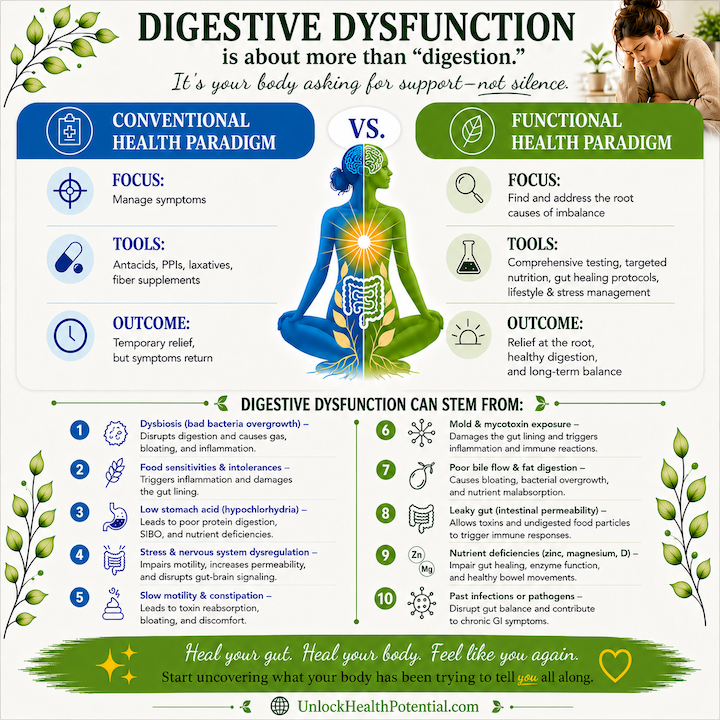
The Conventional Health Paradigm
Conventional medicine is highly effective at diagnosing acute digestive disease, structural abnormalities, inflammatory bowel disease, ulcers, infections, and emergency gastrointestinal conditions.
But when it comes to chronic digestive dysfunction, the conventional approach often centers primarily around symptom management.
The focus frequently becomes:
- Reducing discomfort
- Controlling acid production
- Improving bowel regularity
- Managing symptoms
Common interventions may include:
- Antacids
- Proton pump inhibitors
- Laxatives
- Fiber supplements
- Symptom-management medications
These tools can absolutely provide relief and may be necessary in some situations. But many individuals eventually discover something frustrating: The symptoms often return. That’s because digestive symptoms frequently represent downstream consequences of broader dysfunction occurring beneath the surface.
The central question often becomes: “How do we reduce the symptom?”
Functional medicine asks something different: “Why is the digestive system struggling in the first place?”
That shift changes everything.
The Functional Health Paradigm
Functional medicine views digestive dysfunction through a systems-biology lens. Instead of treating bloating, reflux, constipation, or gut discomfort as isolated inconveniences, it recognizes the digestive system as one of the body’s most influential regulatory networks.
The gut influences:
- Immune function
- Inflammation
- Hormone metabolism
- Neurotransmitter production
- Detoxification
- Nutrient absorption
- Metabolism
- Nervous system signaling
This means digestive symptoms often reflect much broader physiological imbalance.
The goal is not simply temporary symptom relief. The goal is restoring the internal environment that allows healthy digestion, absorption, immune balance, microbial harmony, and gut integrity to occur naturally. Because the body functions as an interconnected ecosystem. When digestive function becomes impaired, the rest of the body often feels it too.
Why Root Causes Matter
Digestive symptoms are often signals—not isolated digestive problems. Bloating, discomfort, irregular bowel habits, reflux, or food reactions may reflect:
- Microbial imbalance
- Nervous system dysregulation
- Impaired digestion
- Inflammation
- Immune activation
- Detoxification stress
- Compromised gut barrier integrity
And unless those deeper drivers are addressed, symptoms often continue cycling no matter how many temporary solutions are added on top. This is why many people feel trapped in repetitive cycles of restrictive dieting, temporary relief, symptom recurrence, and growing food sensitivity.
The body is often trying to communicate that deeper imbalance exists beneath the surface.
10 Major Root Causes of Digestive Dysfunction
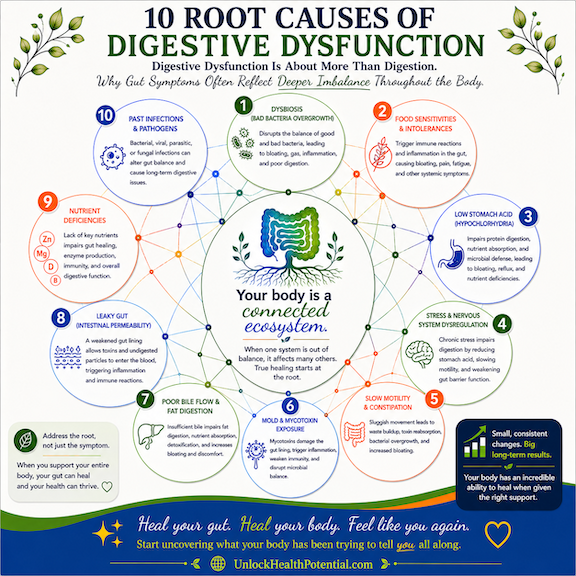
1. Dysbiosis (Bad Bacteria Overgrowth)
The gut microbiome contains trillions of organisms that influence digestion, metabolism, immune balance, inflammation, and neurotransmitter production. When harmful bacteria begin outnumbering beneficial bacteria, digestive function often becomes disrupted.
This may contribute to bloating, gas, inflammation, altered bowel habits, and impaired digestion.
The microbiome functions like an ecosystem. Balance matters.
2. Food Sensitivities & Intolerances
Certain foods may trigger inflammation and irritation within the digestive tract, especially when the gut lining has already become compromised.
Food sensitivities may contribute to bloating, fatigue, headaches, skin issues, brain fog, and immune activation.
The issue is often not simply the food itself, but the condition of the digestive environment interacting with it.
3. Low Stomach Acid (Hypochlorhydria)
Many people assume digestive discomfort is caused by too much stomach acid. In reality, low stomach acid is surprisingly common and may impair:
- Protein digestion
- Nutrient absorption
- Microbial control
- Digestive signaling
Poor stomach acid can contribute to reflux, bloating, bacterial overgrowth, and nutrient deficiencies.
Healthy digestion begins at the very beginning of the digestive process.
4. Stress & Nervous System Dysregulation
The digestive system is deeply connected to the nervous system. When the body remains chronically stressed, digestion often becomes less efficient. Stress can impair:
- Stomach acid production
- Gut motility
- Enzyme release
- Nutrient absorption
- Gut barrier integrity
This is one reason digestive symptoms often worsen during periods of emotional overload and chronic stress.
The body prioritizes survival over digestion.
5. Slow Motility & Constipation
Healthy digestive function depends on proper movement throughout the gastrointestinal tract. When motility slows:
- Waste remains in the intestines longer
- Bacterial overgrowth may increase
- Toxin reabsorption may occur
- Bloating often worsens
Constipation frequently reflects deeper dysfunction involving hydration, nervous system regulation, microbial imbalance, metabolism, or inflammation.
6. Mold & Mycotoxin Exposure
Environmental mold exposure is one of the most overlooked contributors to chronic digestive dysfunction. Mycotoxins may contribute to:
- Inflammation
- Immune dysregulation
- Gut barrier damage
- Microbial imbalance
For some individuals, hidden mold exposure becomes a major driver of digestive symptoms, fatigue, inflammation, and food sensitivities.
7. Poor Bile Flow & Fat Digestion
Bile is essential for fat digestion, microbial balance, toxin elimination, and nutrient absorption. Poor bile flow may contribute to:
- Bloating
- Sluggish digestion
- Nausea
- Fat malabsorption
- Bacterial overgrowth
The liver, gallbladder, and digestive system work together continuously.
8. Leaky Gut (Intestinal Permeability)
The intestinal lining acts as a protective barrier between the digestive tract and the bloodstream. When this barrier becomes compromised, toxins and partially digested particles may enter circulation and activate the immune system.
This may contribute to:
- Inflammation
- Fatigue
- Food sensitivities
- Skin issues
- Autoimmune activity
- Brain fog
The gut barrier is one of the body’s most important protective systems.
9. Nutrient Deficiencies
The digestive system both influences and depends upon nutrient status. Deficiencies in nutrients such as zinc, magnesium, vitamin D, and B vitamins may impair:
- Gut healing
- Enzyme production
- Immune regulation
- Digestive function
The body cannot repair digestive dysfunction efficiently without proper nutritional support.
10. Past Infections & Pathogens
Previous infections may leave long-term effects on the digestive ecosystem. Bacterial, viral, parasitic, or fungal exposures can alter:
- Microbiome composition
- Immune signaling
- Inflammation
- Digestive function
In many individuals, chronic digestive symptoms persist long after the original infection appears to resolve.

How to Start Supporting Digestive Function Naturally
The goal is not perfection. The goal is creating an environment where the digestive system feels safer, more balanced, and better supported.
Here’s where to begin:
1. Reduce Ultra-Processed Foods
Focus more on:
- Whole foods
- Fiber-rich vegetables
- Healthy fats
- High-quality protein
Reduce:
- Excess sugar
- Highly processed foods
- Artificial additives
- Excess alcohol
The microbiome responds rapidly to dietary patterns.
2. Support Nervous System Regulation
Slow down while eating whenever possible.
Incorporate:
- Deep breathing
- Walking
- Less rushed meals
- Reduced overstimulation
Digestion functions best when the nervous system feels safe.
3. Prioritize Sleep & Recovery
Sleep strongly influences:
- Inflammation
- Gut permeability
- Immune balance
- Microbial diversity
The digestive system cannot fully heal without restoration.
4. Improve Hydration & Movement
Support healthy motility through:
- Adequate hydration
- Daily movement
- Walking
- Fiber intake
Digestive function depends heavily on movement and circulation.
5. Pay Attention to Patterns
Notice:
- Foods that consistently trigger symptoms
- Stress-related digestive changes
- Sleep-related flare-ups
- Energy shifts after meals
- Bloating timing
Your symptoms often contain important clues.
Final Thought
Digestive dysfunction is rarely just about digestion. And gut symptoms are almost never random. More often, they represent the body’s attempt to communicate that broader imbalance exists beneath the surface.
The goal is not simply suppressing symptoms temporarily. The goal is restoring the systems that allow healthy digestion, absorption, immune regulation, microbial balance, and resilience to occur naturally. Because your digestive system is not separate from the rest of your body. It is deeply connected to nearly every aspect of your health.
And when digestive function begins improving, many other systems often improve alongside it.
Okay — So What Do I Actually Do With All This?
General knowledge is useful — but knowing which of the 24 major root causes are driving your symptoms is the real game-changer. That’s what the HealthPotentialAnalytics™ assessment is built to do. This isn’t a throwaway online quiz — it’s a sophisticated algorithm refined over years of expert work that acts like a detective for your body, connecting the dots across systems to reveal exactly where your trouble is hiding. You get what you pay for, and serious results come from serious tools.

FAQs
If you regularly experience bloating, gas, reflux, constipation, food sensitivities, fatigue after meals, or irregular digestion, your symptoms may be signaling more than a simple stomach issue. Digestive dysfunction often reflects deeper imbalances involving the gut microbiome, inflammation, nervous system regulation, nutrient absorption, or immune function.
Absolutely. The gut influences far more than digestion. It plays a major role in immune function, inflammation, hormone balance, nutrient absorption, metabolism, and even brain function through the gut-brain axis. This is why digestive dysfunction is often associated with fatigue, anxiety, brain fog, skin issues, and hormonal symptoms.
Start by focusing on the foundations: prioritize whole foods, reduce ultra-processed foods, support stress regulation, improve sleep quality, stay hydrated, and move your body consistently. Healthy digestion depends on much more than food alone—it depends on the environment you create for your digestive system every day.
Because digestive symptoms are often signals rather than root causes. While symptom-focused strategies may provide relief, they may not address deeper issues such as dysbiosis, low stomach acid, impaired motility, gut permeability, chronic stress, inflammation, or microbial imbalance. Sustainable improvement often requires understanding why the digestive system became dysregulated in the first place.
In many cases, yes. Because the gut is deeply connected to immune function, inflammation, hormones, metabolism, and brain health, improvements in digestive function often create positive ripple effects throughout the body. When the gut begins functioning better, many people notice improvements in energy, mood, mental clarity, resilience, and overall well-being. Your gut is not isolated from the rest of your body—it’s one of the most influential systems in it.
This content is for educational purposes only and is not intended as a substitute for professional medical advice, diagnosis, or treatment. Individual results vary.
References & Further Reading
Cryan JF, O’Riordan KJ, Cowan CSM, et al. The Microbiota-Gut-Brain Axis. Physiological Reviews. 2019;99(4):1877–2013.
https://journals.physiology.org/doi/full/10.1152/physrev.00018.2018
Cani PD, Amar J, Iglesias MA, et al. Metabolic Endotoxemia Initiates Obesity and Insulin Resistance. Diabetes. 2007;56(7):1761–1772.
https://diabetesjournals.org/diabetes/article/56/7/1761/12878/Metabolic-Endotoxemia-Initiates-Obesity-and
Fasano A. Leaky Gut and Autoimmune Diseases. Clinical Reviews in Allergy & Immunology. 2012;42(1):71–78.
https://link.springer.com/article/10.1007/s12016-011-8291-x
Mayer EA, Knight R, Mazmanian SK, et al. Gut Microbes and the Brain: Paradigm Shift in Neuroscience. Journal of Neuroscience. 2014;34(46):15490–15496.
https://www.jneurosci.org/content/34/46/15490
Ford AC, Sperber AD, Corsetti M, et al. Irritable Bowel Syndrome. The Lancet. 2020;396(10263):1675–1688.
https://www.sciencedirect.com/science/article/pii/S014067362031503X
Sonnenburg ED, Sonnenburg JL. Starving Our Microbial Self: The Deleterious Consequences of a Diet Deficient in Microbiota-Accessible Carbohydrates. Cell Metabolism. 2014;20(5):779–786.
https://www.cell.com/cell-metabolism/fulltext/S1550-4131(14)00311-8
Vujkovic-Cvijin I, Sklar J, Jiang L, et al. Host Variables Confound Gut Microbiota Studies of Human Disease. Nature. 2020;587(7834):448–454.
https://www.nature.com/articles/s41586-020-2881-9
Tilg H, Moschen AR. Microbiota and Diabetes: An Evolving Relationship. Gut. 2014;63(9):1513–1521.
https://gut.bmj.com/content/63/9/1513
Dinan TG, Cryan JF. Gut Instincts: Microbiota as a Key Regulator of Brain Development, Ageing and Neurodegeneration. The Journal of Physiology. 2017;595(2):489–503.
https://physoc.onlinelibrary.wiley.com/doi/full/10.1113/JP273106
Bischoff SC, Barbara G, Buurman W, et al. Intestinal Permeability – A New Target for Disease Prevention and Therapy. BMC Gastroenterology. 2014;14:189.
https://bmcgastroenterol.biomedcentral.com/articles/10.1186/s12876-014-0189-7